Beyond the Coin Flip: Building Sustainable Healthcare in an Unpredictable Market. For many employers, healthcare has started to feel like a coin flip. Some years, you “win.” Claims are manageable and utilization trends are steady. Other years, you “lose.” A handful of high-cost claims hit, specialty pharmacy spend spikes, and costs surge. Yet, no matter which way the coin lands, when renewal season arrives, rates still climb.
It feels like heads or tails. Employers are left feeling exhausted with limited options. If claims are low, the carriers absorb the savings. If claims are high, the employer deals with the loss.
Heads, you tread water. Tails, you pay more.
And this is why so many organizations feel stuck in a cycle of renewal-driven decision making.
According to the Kaiser Family Foundation, the average annual premium for employer-sponsored family coverage in 2025 reached $26,993, a 6% increase over the previous year. These costs are rising much faster than general inflation, which was 2.4% in the same year, making healthcare one of the fastest-growing expenses for many organizations.
With costs this high, every decision can feel critical. Employers are under constant pressure. The traditional tools for managing costs, such as raising deductibles or cost shifting, were designed for predictable trends. Today, they feel like short-term fixes, leaving organizations trapped in a cycle of rising costs and reactive planning.
When premiums feel unpredictable, pharmacy spend is opaque and decisions feel reactive instead of strategic, the system can feel like it’s working against you. Both medium and large employers are feeling the strain and often struggle to make meaningful changes to their programs.
There is another option — sustainable healthcare — a plan that can work for your organization. Even when costs are unpredictable.
It’s built to protect you from financial shock, give you control over your strategy, and make pricing clear, whether that means ensuring every vendor is working toward the same goal or providing transparency so you always know where your dollars are going. Most importantly, it’s designed to adjust as conditions change, rather than forcing you into a one-size-fits-all solution.
Building sustainable healthcare can look different depending on the size of your organization. For small and mid-sized employers, it’s often about access; unlocking tools and strategies that historically were only available to large organizations. For larger employers, it’s about execution; making sure all the moving parts are working together, so your plan actually delivers results instead of just adding complexity.
While building a strategy can look different for each organization, a sustainable health plan requires some constant elements:
Sustainable healthcare is not about winning the coin flip. It is about stepping away from the table altogether and building something better. If you want to learn more about building a benefits program that works for your people, don’t hesitate to reach out.
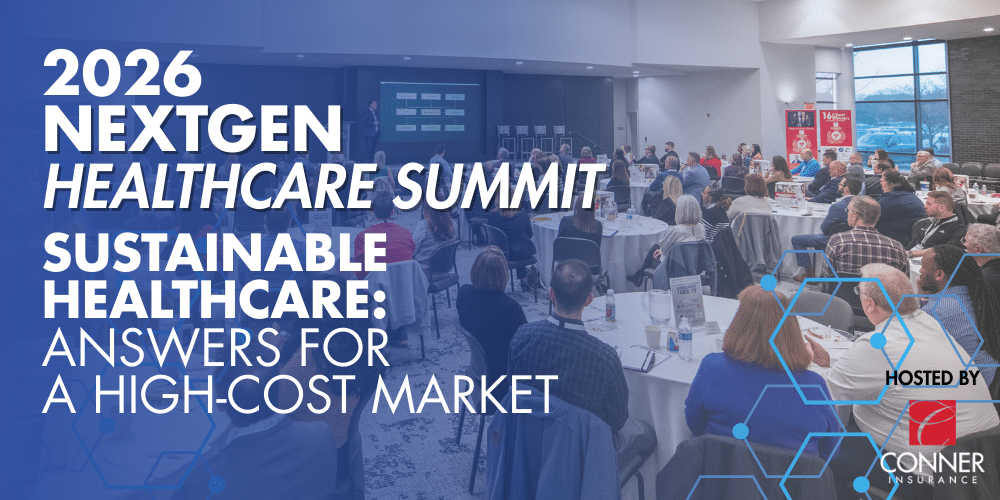
Or join us at the 2026 Next Gen Healthcare Summit where we’ll explore how employers move from reactive to strategic in a high-cost healthcare market.
You’ll hear directly from:
Sustainable Healthcare: Answers for a High-Cost Market
March 10, 2026
7:30 AM – 12:30 PM
FORUM Events Center – Fishers, Indiana
The market isn’t getting easier. But it can become more sustainable.
We look forward to talking with you!
Life is full of milestones—getting married, welcoming a new baby, experiencing a divorce, or adding…
The GLP-1 Boom: A Breakthrough With a Growing Blind Spot. Medications like Ozempic, Wegovy, and…
Understanding Prior Authorization in Pharmacy Benefits. Heading to the pharmacy to fill a prescription only…
Navigating Prior Authorization: A Checkpoint on Your Healthcare Journey. Just like planning a road trip,…
NICE Healthcare is Bringing a New Standard of Care to Indianapolis in 2026. With a…
In today’s competitive business landscape, delivering employee benefits that are both cost-effective for companies and…